Leonard Cohen’s worst album was made at gunpoint (literally)
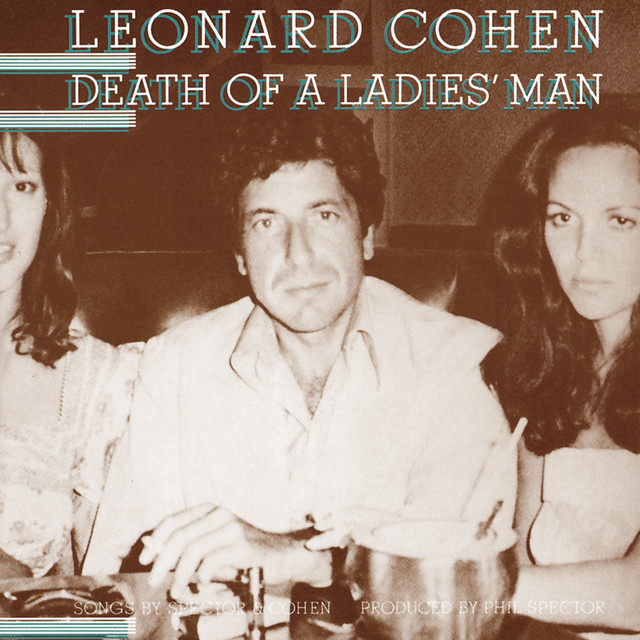
Leonard Cohen’s 1977 album Death of a Ladies’ Man has been called (sharp inhale) dated, sleazy, obnoxious, corny, claustrophobic, shambolic, cheesy, incoherent, sordid, ludicrous, forced, exhausting, ambivalent, messy, tacky, cocaine-crazy, hedonistic, histrionic, heavy-handed, shallow, neurotic, Freudian, cheap, schmaltzy, ridiculous, distasteful, grating, atrocious, bizarre, perverse, grotesque, dissonant, cluttered, offensive, excessive, crude, sickly, goofy, off-putting, muddy, creepy, horny, slurred, pathetic, stupid, awful, torturous, wacky, and just plain bad. All of these are apt descriptors. This album is all of these things. It’s great!
Two immense and utterly incompatible talents collide: Leonard Cohen was on commercial decline, vaguely known for folksy 60s songs, and Phil Spector was steadily tipping into literal and genuine insanity, of the soon-to-be-convicted-of-second-degree-wife-murder kind. Cohen: sensitive, gloomy, stark, acoustic. Spector: ostentatious, erratic, maximalist, commercial. Any collaboration would surely collapse under its internal contradictions.
Even for the 70s, the production was infamously chaotic. The paranoiac Spector grew increasingly erratic: drugs, booze, guns, and bodyguards lay strewn about the studio like Christmas wrapping paper. At one point he drew a pistol, held it to Cohen’s throat, and said: "I love you, Leonard." (The reply: "I sure hope you do, Phil.")
Listeners will note that Cohen’s vocals, usually measured with a poet’s attention to recitation, are uncharacteristically carefree — because the sessions came to an end when Spector stole the guide vocals [1] and ran away to mix the tapes alone. (Cohen: "I had the option of hiring my own private army and fighting it out with him on Sunset Boulevard or letting it go ... I let it go.")
The album opens with "True Love Leaves No Traces", a sincerely gorgeous love song that is often singled out as the only redeeming feature of this album:
True love leaves no traces
If you and I are one
It’s lost in our embraces
Like stars against the sun
From there our hero suffers some just-short-of-fatal wound, seeking refuge in sex with "Iodine":
I asked you if a man could be forgiven
And though I failed at love, was this a crime?
You said, "Don’t worry, don’t you worry, darling
There are many ways a man can serve his time"
Following its heels is the shamelessly voyeuristic "Paper Thin Hotel", which abandons all subtlety:
I stood there with my ear against the wall
I was not seized by jealousy at all
In fact a burden lifted from my soul
I learned that love was out of my control
"Memories" starts off with a Nazi officer propositioning Nico and is incredibly fun to bellow along with:
I pinned an Iron Cross to my lapel
I walked up to the tallest and the blondest girl
I said, "Look, you don’t know me now, but very soon you will —
So won’t you let me see?"
I said, "Won’t you let me see?"
I said, "Won’t you let me see your naked body?"
A realization of emptiness settles in with the slow and absolutely beautiful "I Left A Woman Waiting":
She said, I see your eyes are dead
What happened to you, lover?
But then, psyche! No moment of stillness and quietude for you. Here come Bob Dylan and Allen Ginsberg, tapped in to do backing vocals for a quasi-disco song titled "Don’t Go Home With Your Hard-On" (yes, really):
Ah but don’t go home with your hard-on
It will only drive you insane
You can’t shake it or break it with your Motown
You can’t melt it down in the rain
Followed by the rollicking country tune "Fingerprints":
I touched you once too often
Now I don’t know who I am
My fingerprints were missing
When I wiped away the jam
Before "Death of a Ladies’ Man" finishes it all off with a nine-minute extravagant affair that forecasts its own reception:
So the great affair is over but whoever would have guessed
It would leave us all so vacant and so deeply unimpressed
Every song overstays its welcome, smelling of sweat and aphrodisiac. They wander through vaudeville, disco, country, lounge, pop, and end up as novelties. Brass blares between histrionic strings; it feels something like a headache or a hangover. But there’s a hidden harmony to the thing! Cohen’s music clashes with Spector’s arrangements violently and gloriously. It’s decadent and amazing and it perfectly captures the mid-life crisis of a frustrated Bacchus lost in a desperate haze of sexual malaise. It’s paradoxical and contradictory and clearly should not exist, but it does. It’s great!